As temperatures drop during the winter months, tiling can present temperature-related challenges. Cold conditions can slow down tile adhesive and grout curing times, delay installations and increase the risk of failures if the correct precautions aren’t taken.
Whatever project is being undertaken, understanding how low temperatures affect your adhesives is essential for achieving a durable, professional finish.
In this guide, we share our top tips for tiling in cold weather, from checking site conditions to choosing the right adhesive.
What is the minimum temperature for tiling?
As a general rule, cementitious tile adhesives require air and substrate temperatures of at least 5°C during application. However, minimum temperature requirements can vary between products, so always check the relevant Kelmore Technical Data Sheet before starting work.
It’s important to check the temperature of the background as well as the surrounding air. Floors and walls can remain cold even when a room feels warm enough, particularly in new builds, garages and unheated properties.
You should also consider overnight temperatures. The temperature requirements during curing may differ from those during application, so make sure suitable conditions can be maintained throughout the required curing period. If frost is forecast, ensure the installation can be adequately protected. If the required conditions cannot be maintained, postponing the work may be the safest option.
How does cold weather affect tile adhesive and grout?
Cold temperatures slow down the processes that allow cementitious adhesives and grouts to develop their strength. As a result, products can take longer to set and cure than their stated times suggest.
This can cause several problems:
- Longer curing times: Adhesive may not be ready for grouting as quickly as expected.
- Installation delays: Subsequent work may need to be postponed until the adhesive has developed sufficient strength.
- Risk of frost damage: If an adhesive freezes during its early curing stages, its bond and performance may be compromised.
- Potential installation failure: Working on tiles too early can disturb an adhesive that hasn’t cured sufficiently.
Always allow for site conditions when planning your installation. Don’t assume an adhesive is ready for grouting simply because its usual stated setting time has elapsed.
Which tile adhesive should you use in cold weather?
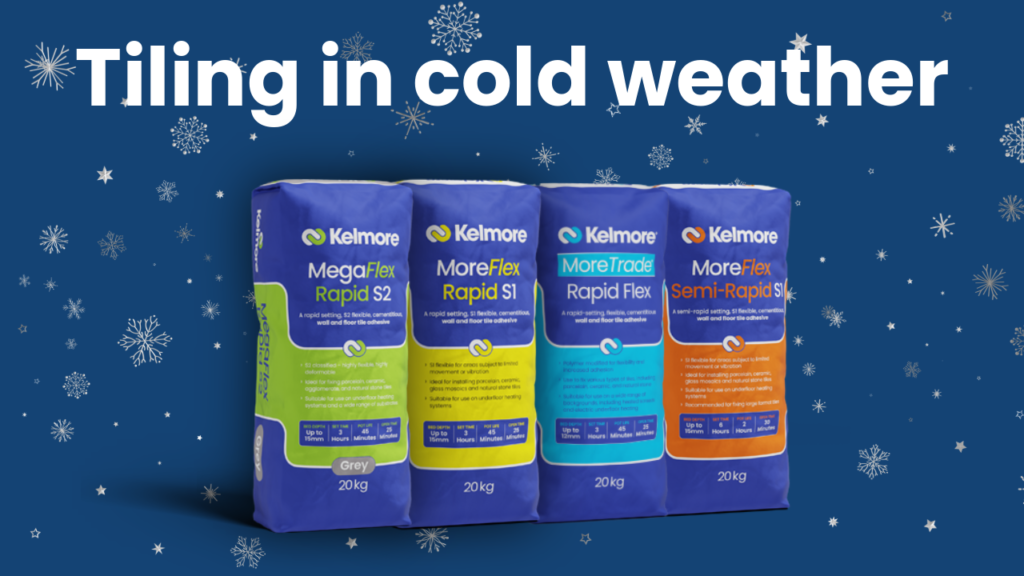
MoreFlex Rapid S1, MegaFlex Rapid S2 and MoreFlex Semi-Rapid S1 can help reduce waiting times compared with standard-setting alternatives. However, they must still be applied within their specified temperature range.
The setting and curing times stated on Technical Data Sheets are based on a temperature of 20°C. Choosing a faster-setting adhesive can help reduce the extended setting times associated with lower temperatures.
When selecting an adhesive, consider the tile type, substrate, working time and installation requirements, as well as the conditions on site.
Can you speed up tile adhesive curing time?
It can be tempting to speed up curing when cold weather causes delays but attempting to force the process can affect product performance. Never change the recommended mixing ratio or use hot mixing water.
Where appropriate, temporary heating can help maintain a suitable working temperature. Aim for a stable environment rather than directing intense heat straight onto the newly tiled surface – it is worth noting that some types of gas fired space heaters can introduce additional moisture into the working area which can affect curing times.
Allow sufficient time for the adhesive to cure before grouting. In low temperatures curing times can extend to double, or more, than the stated time. Always follow the manufacturer’s instructions and protect the installation from frost during the curing period.
How should you store tiling products in winter?
Correct storage is essential for maintaining product performance. Keep adhesives, grouts, primers and other tiling materials dry and protected from the weather, following the storage instructions on their packaging.
Avoid leaving products in conditions where they may be exposed to damp or freezing temperatures. Liquid products can be particularly sensitive to frost, so never assume they remain suitable for use after freezing.
Where practical, bring materials into a suitable indoor environment before use and allow them to reach a more moderate temperature.
Your winter tiling checklist
Before starting work, remember to:
- Check air, water and background temperatures.
- Review the weather forecast, including overnight conditions.
- Ensure the background is clean, sound and suitable for tiling.
- Choose an adhesive suitable for the application.
- Store materials in accordance with their product guidance.
- Allow additional time for setting and curing where necessary.
- Protect the installation from frost, rain and premature loading.
Plan ahead for successful winter tiling
Tiling in cold weather requires careful planning but understanding how low temperatures can affect adhesives and grouts can help reduce avoidable delays and installation problems.
By checking site conditions, selecting suitable products and allowing enough time for curing, you can approach winter tiling projects with greater confidence.
For further information, explore Kelmore’s tile adhesive range or contact our technical team for product-specific guidance.
Written by Chris Pratt, Technical Support Manager at Kelmore.
Our Technical Support Team is available Monday – Friday, 8:00am – 4:30pm on 01257 830511 or technical@kelmore.co.uk. Please don’t hesitate to contact us for any advice or support.