When using a levelling and smoothing compound, good floor preparation is essential for achieving a smooth, durable finish. All levelling compounds can only perform as well as the substrate beneath them allows.
Whether you’re preparing a floor for vinyl, LVT, carpet, tiles or another floor covering, following the correct preparation process can help achieve the best possible result.
What tools are needed for levelling a floor?
The tools required for laying a levelling and smoothing compound are the same regardless of which compound your floor requires. As a minimum requirement, you will need the following equipment:
- Mixing bucket
- Electric mixer
- Steel trowel
- Spiked roller
- Vacuum
- Gloves
Here’s our step-by-step guide to preparing floors for levelling and smoothing compounds:
- Identify the substrate
Start by identifying the type and condition of the substrate you’re working with. Common substrates include concrete, cementitious screeds, calcium sulphate screeds and flooring grade asphalt.
Different substrates require different preparation methods and primers, so always check that your chosen levelling and smoothing compound is suitable for the application.
- Make sure the substrate is clean
Before applying any products, check the substrate carefully and remove any surface contaminants such as laitance, water soluble adhesives, paint, grease or other contaminants that could prevent your preparation products from achieving a strong bond to the substrate.
Depending on the substrate and its condition, you may need mechanical preparation such as sanding or grinding. Once complete, vacuum away any remaining dust and debris.
- Inspect the condition of the substrate
Now that surface contaminations have been removed, any unstable areas, such as cracks, loose or poorly bonded ceramic tiles, holes or other instabilities in the substrate should be repaired or removed first.
Movement joints should be maintained and continue to the surface of the installed floor covering
- Check the moisture level
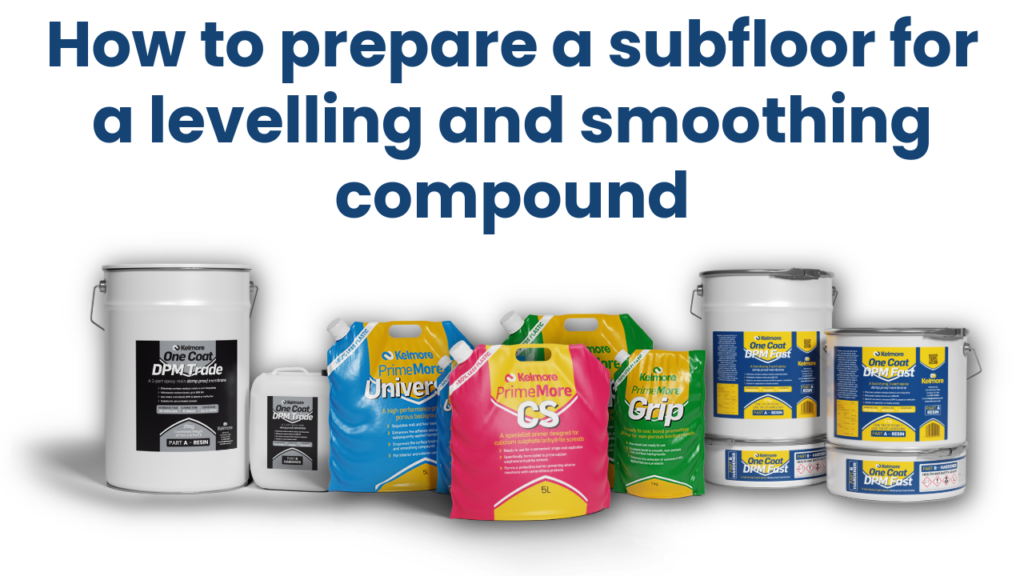
You must always consider moisture when preparing a floor for levelling and smoothing compound. You will need to test the substrate using a hygrometer. If it reads above 65% RH when fitting wood flooring, or above 75% RH when fitting resilient floor coverings, a product that controls moisture, such as One Coat DPM Fast, will need to be applied before proceeding with the levelling and smoothing compound.
Where moisture management systems are required, selection of the appropriate system will depend upon the presence of a fully functioning structural DPM and the type of screed.
- Apply the correct primer
Priming regulates substrate absorbency and promotes adhesion between the substrate and the compound. The primer you need depends on the substrate. For example, Kelmore’s PrimeMore range includes products for porous and absorbent backgrounds, non-porous substrates and calcium sulphate screeds.
- Check the required depth
Before mixing, check the existing floor levels and work out the thickness you need to apply. Make sure it falls within the minimum and maximum thickness specified for your levelling and smoothing compound, and allow for doorways, thresholds and the finished floor height.
- Mix and apply the levelling compound
Once the substrate is prepared and primed, mix and apply the compound following the mixing instructions carefully.
Allow it to cure fully before installing the floor covering, following the manufacturer’s drying and curing times. While it cures, keep the space free from foot traffic and aim for good room conditions with an air temperature of 20°C, air humidity of around 65% and good ventilation.
Cold, humid or damp rooms, or those with poor airflow, will prolong curing and drying times, so allow extra time. Avoid strong draughts and direct sunlight, which can force-dry the compound. This affects the surface cure and can cause excess tension and cracking.
Getting the preparation right
Correct preparation is a key part of any levelling and smoothing compound installation. Identify the substrate, check its condition and moisture level, remove contaminants, apply the right primer and follow the manufacturer’s instructions, and you’ll have a suitable surface ready for the final floor covering.
Written by Rob Harper, Technical Support Specialist at Kelmore.
Our Technical Support Team is available Monday – Friday, 8:00am – 4:30pm on 01257 830511 or technical@kelmore.co.uk. Please don’t hesitate to contact us for any advice or support.