Having heard the story behind Kelmore, it’s time to get to know the person behind the business a little better.
In the second part of our interview, Mark Kelly shares more about his approach to leadership, the experiences that have shaped his values, his family life and a few things you might not know about him.
What kind of culture do you want to create at Kelmore?
An honest, authentic, reliable and hardworking culture, and one where people look after and care for each other. Integrity is important, we do what we say we’re going to do. To create a great culture, you need the right environment for people to contribute and flourish, and I believe we have created this at Kelmore.
What qualities do you think make a great leader?
Honesty, integrity, dedication and a strong work ethic. I also think consistency is very important because it helps build trust and confidence.
How would your friends or colleagues describe your strengths and weaknesses?
I think my friends would describe me as the dependable and supportive one. I’m the person they know they can rely on if they have a problem – “Speak to Mark, he’ll sort it.”
For certain, I think everybody at Kelmore will know that I/we have high standards and high expectations in everything we do. I’m pretty relentless when it comes to driving the business forward and making improvements.
With colleagues, I think it would vary depending on which department they work in, because different people see different sides of me and my role. The production team, for example, might look at the culture we’ve created and the environment we’ve built together and say that’s a strength. I think the people I work with more closely would say my understanding of the market, passion for what we do at Kelmore, my very varied experience and my consistency are key strengths.
In terms of weaknesses, I’m not sure what people would say but I’d genuinely like to know what other people think. I welcome feedback because I want to be as good as I can be, both as an individual and in my role. If there are areas where I need to improve, I’d much rather someone tell me. I’d genuinely like to understand what my blind spots are and what I could do better.
What do you look for in the people you bring into the business?
When I first meet people, I try to understand their values, their work ethic and how they present themselves is important. I’m very quickly analysing if they are a good fit for the company and our culture.
When we interview people to join the business, we look for similar traits to the ones we have ourselves. We’ve built such a strong and positive culture within the business that we put just as much emphasis on whether someone will fit into that culture as we do on their skills and experience.
Of course, ability is important, but commitment, dedication, care and honesty are crucial. Ultimately, I want to bring good people into the business who are going to work well with others and contribute positively to the culture we’ve created.
What was your first ever job?
My first part-time job was a milk round, which I did on Monday and Wednesday mornings for £3 a day. Dad would wake me up at 5am, and I’d start my round at 5.30am. Dad would then head off to work at Tilemaster with his two slices of toast and a coffee.
I’d finish my round by 8am, which left me just enough time to get changed and make it to school.
I’d pleaded with the milkman for about 6 months to give me a job but you had to be 13 to work on the milk round. The milk round for our estate started outside our house so eventually he gave in, made an exception and let me start aged 11.
It was good grounding for me, the pace of delivering the milk was relentless and that milk float was setting off to the next street whether you were ready or not. I took pride in saving my £3 a day, usually towards some fishing tackle I’d had my eye on for a while.
My first full-time job was working for the Benefits Agency as an Administrative Assistant. I was offered the role after completing my GCSEs but couldn’t start until I turned 16. Once I turned 16, started full-time work the following Monday.
What brought you to the industry?
It was to help Dad and the business following his accident in February 2002 when he fell into an industrial mixer at work. Dad’s injuries were significant, he lost limbs and had a lot of surgery to piece him back together, but his head and mindset were unaffected. Dad wanted to keep the business going so I initially took a six-week “career break” from the Benefits Agency and joined Tilemaster to help make products and fulfil some orders while Dad recovered.
How have your life experiences shaped your values?
I’d put a lot of it down to the household I grew up in. We very rarely spoke about work ethic or about having to put effort into everything you do. It wasn’t something my parents or grandparents sat me down and taught me, I simply observed the way they lived their lives and wanted to follow.
I had two very hard-working parents and four hard-working grandparents, and I grew up surrounded by people who worked incredibly hard. That naturally shaped me and gave me the drive to work hard.
My first few years at Tilemaster had a big influence. It wasn’t a particularly nice job at the time, but I got stuck in and learned from that experience. It was a responsible job, with orders to fulfil, and failing to deliver on time wasn’t an option. I think this is where my high standards and focus on consistently delivering stem from.
Dad’s second accident in August 2006 shaped me the most from a mindset perspective. Dad was hit by a van whilst out cycling one morning, the impact fractured his skull from ear to ear and he suffered brain damage. The prognosis from the Doctor’s that day wasn’t positive at all, they prepared us for the worst. My coping mechanism is keeping busy so I drove back to work that afternoon (because we had orders to fulfil) and it was during the journey back to work where the realisation struck; that my rock, my sounding board, the person who reassured and supported me may no longer be there. In that moment, it was as if a switch flicked and whilst it was frightening at the time, it was in that moment that I took more ownership and responsibility for Tilemaster.
In the years that followed, I learnt an awful lot from customers, end users and competitors. I was like a sponge and all the good ideas and positive things I learnt along the way were very quickly implemented into the business.
What are you proud of having accomplished?
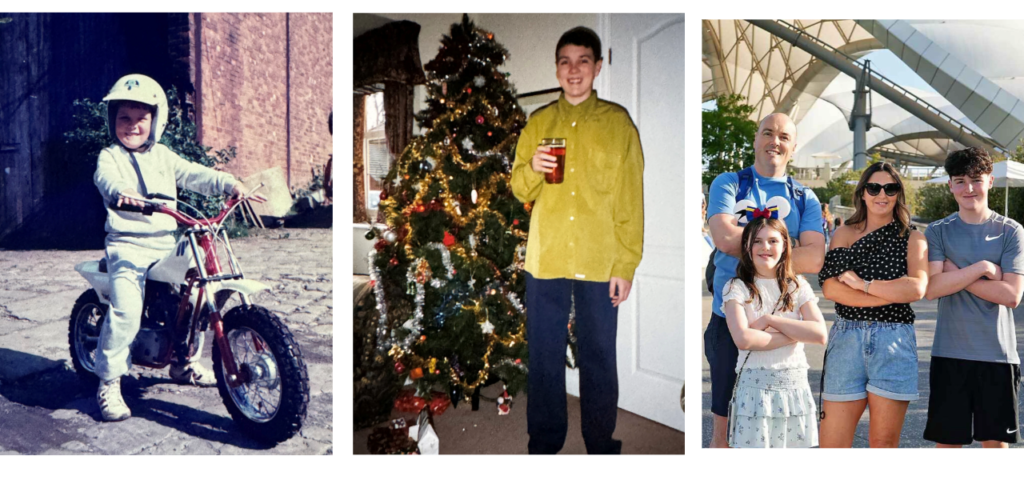
From a family perspective, I’m very proud of my family at home, my wife Katrina and our two children. My wife is incredibly supportive and we are blessed to have our children, Tom and Louise.
From a work perspective, we’ve always been very grounded and humble, but I’m incredibly proud of what we’ve achieved with Kelmore, especially considering we’ve only been operational for just over two and a half years.
I’ve also got to say I’m very proud of what we achieved at Tilemaster. When I joined Tilemaster in 2002, our capacity was 5 – 6 pallets per day and we had to produce and sell this to break even. When we moved premises in 2011, we had a team of 9 people and produced on average 100 pallets per week, by 2017, we employed 65 people and were producing 1,000 pallets per week. Besides the output, we were becoming one of the most trusted and recognised brands in the industry which was an incredible achievement from where it all started, and one I’m proud of.
What is something people might be surprised to learn about you?
During my time at Tilemaster, particularly towards the end, I was struggling with anxiety. At the time, I didn’t really understand what was happening to me, I just knew that certain situations would trigger a reaction that I couldn’t explain. In these moments, I would feel panicked, become warm and clammy and it felt like the room was closing in. It was difficult to manage and I couldn’t understand it.
At the time, there was also a lot of attention on me because I was leaving Tilemaster. Customers were naturally curious about what I was going to do next, and I found that difficult because I’ve never been someone who enjoys being front and centre.
Over time, I’ve become much more familiar with what triggers it and how to manage it. It’s not something that happens often now, but if I do have a moment, I understand what’s happening, and I know that I just need a little bit of space to deal with it.
People might be surprised to hear that because, from the outside, I probably come across as someone who is confident and assured. In my role as Managing Director, I’m often the focal point, the one leading meetings and presentations but I’ve never enjoyed being the centre of attention, it’s something I’ve learned to accept as part of my role.
What is one thing you never take for granted?
My health and having another day ahead of me. I don’t consciously think about it every day, but I’m absolutely aware that tomorrow isn’t a given.
What motivates you outside of work?
Work is such a huge part of my life, and a lot of what motivates me outside of work is connected to what I put into work.
Having a happy family and a stable home, being a good dad and husband would be number one for me.
What is something you want to be remembered for?
Being a good person. I can’t control what other people think of me, but if I’m remembered as one of the good ones, I’d be happy with that.
Who was your favourite music artist when you were a child and what’s the first single you ever bought?
The first band I really listened to as a child was Queen. My dad also played a lot of The Beatles in the car, so I have some great memories of listening to them growing up, and I still love The Beatles.
The first single I bought was The Riverboat Song by Ocean Colour Scene.
What do you like to do in your spare time?
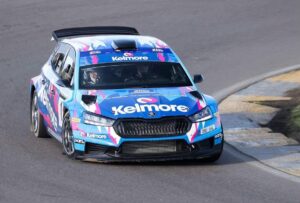
Family time and following my children around various sporting events at weekends. Of course, my rallying has become a big passion of mine and I’m certainly not thinking of work whilst hurtling down narrow, country lanes. Football would be my other big interest and following Southampton FC.
What would your autobiography be called?
I think I’d call it Resilience. If you asked me to choose one thing you need to succeed in business, it would be resilience.
What is your most unpopular opinion?
I’m not sure I have a particularly controversial one. I suppose I’d go with pineapple on pizza. I know a lot of people won’t have it, but it works for me.
Do you have any traditions you like to follow?
I’m a little superstitious when it comes to sport. In my football days, I had my own routines that I had to follow, right sock first, followed by my right boot and I had to do my pre-match stretches in a certain order. Now, with my rallying, I have a certain order of fitting my safety equipment and safety harnesses in the rally car, always starting with the right-hand harness first.
If you could swap jobs with anyone at Kelmore for a day, who would it be?
I’d choose to spend the day in Customer Services. I really enjoy talking to customers and I think it would be interesting to spend a day in their role speaking to and looking after customers.
It would also take me back to the early days, when it was me, Mum and Dad covering every role in Tilemaster, including Customer Services, happy times!
What is next for Kelmore?
Continue working hard to build our reputation within the industry. It’s never been about the size of our business; we have a clear goal and that’s to be the best at what we do, and first in class.
That means continuing to build on what we’ve created and working towards becoming recognised as the number one brand for adhesives and levelling compounds in the industry.