Excess moisture in cementitious subfloors is one of the most common causes of floor coverings failing in residential and commercial properties. An epoxy liquid damp proof membrane (DPM) creates a protective barrier that helps prevent moisture from damaging adhesives, levelling compounds and floor coverings. Whether you’re installing LVT, vinyl, laminate or engineered wood flooring, using a liquid DPM where required can significantly reduce the risk of costly failures and remedial work.
In this guide, we’ll explain what an epoxy liquid DPM is, when it should be used, and how it protects flooring installations from moisture-related damage.
How is a 2-part epoxy liquid DPM used?
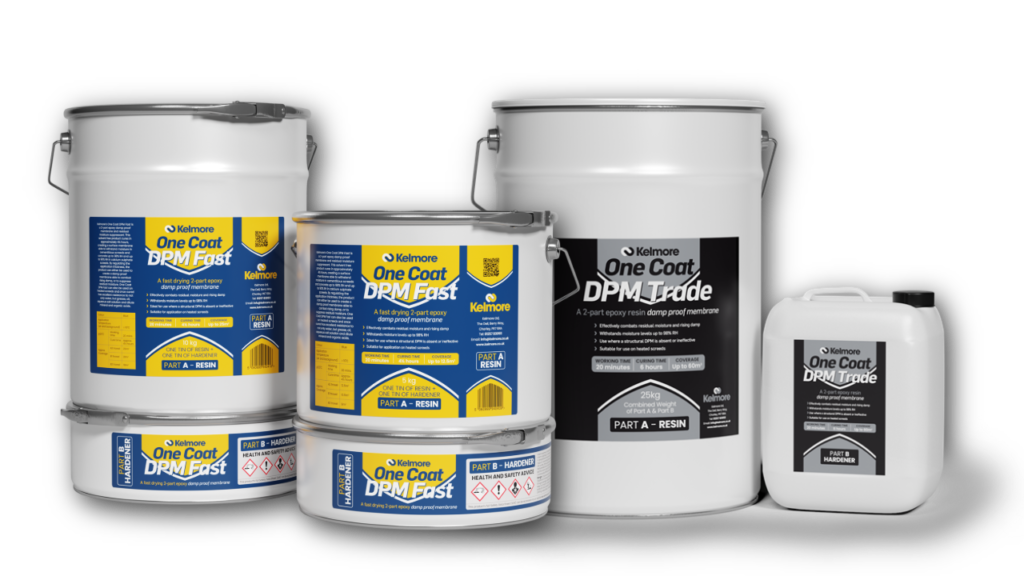
A 2-part epoxy liquid DPM is applied directly onto a solid subfloor to create a barrier that protects adhesives, levelling and smoothing compounds, and floor coverings from moisture.
Moisture sensitive floor coverings, adhesives and preparation materials used on subfloors where moisture greater than 75% RH is present are at a higher risk of failure if a epoxy liquid DPM is not used. Moisture should be measured using appropriate equipment, with readings expressed as Relative Humidity (RH) and should always be tested in accordance with the British Codes of Practice BS 8203, BS 5325 and BS 8201.
In older buildings built before the 1970s, where no structural damp proof membrane is present, damp can rise through the concrete subfloor. This can cause failures in the levelling and smoothing compound, adhesive and floor coverings above the concrete. In these circumstances, installing a liquid damp proof membrane is critical.
Why moisture in solid floors can cause problems
Solid floors naturally retain moisture for long periods, even when the surface appears dry. Installing flooring can trap moisture beneath the finished floor, leading to long-term damage.
Common moisture-related flooring problems include:
- Bubbling or lifting LVT and vinyl flooring
- Warped laminate flooring
- Adhesive failure
- Mould and mildew growth
- Failure of levelling compounds
In many cases, flooring damage may not appear until weeks or months after installation, making moisture one of the most common causes of premature flooring failure.
When should you use an epoxy liquid DPM?
When installing moisture sensitive floor coverings, such as wood or vinyl, an epoxy liquid DPM is recommended when:
- Moisture levels exceed the recommended 75% RH
- Renovating older buildings built before the 1970s where no structural damp proof membrane is present
- There is uncertainty about the effectiveness of an existing damp proof membrane
- A calcium sulphate screed is not sufficiently dry to fit a moisture sensitive floor finish
Preventative moisture control reduces the risk of future flooring replacement, remedial work, and disruption in both domestic and commercial environments.
Can a 2-part epoxy liquid DPM be used on calcium sulphate floors?
Yes, it can be used where residual moisture is present in calcium sulphate screeds, sometimes referred to as anhydrite, hemihydrate, or gypsum screeds, ensuring the following procedures are undertaken:
- Mechanically abrade the surface of the screed to remove any surface contaminants including laitance
- New heated screeds must be commissioned from 7 days after screed installation and before work commences
- The screed should be heated slowly and in accordance with the recommendations of the screed manufacturer
- Confirm that the screed is below 90% RH – switch underfloor heating off 48 hours prior to taking the moisture reading
- Switch off underfloor heating 48 hours prior to commencing work
Common mistakes to avoid when applying a liquid DPM
To achieve the best results, avoid these common mistakes when applying the DPM:
- Not maintaining the pre-gauged ratio of resin to hardener
- Not fully mixing the DPM resin and hardener components together
- Applying the DPM over contaminated surfaces
- Ignoring working and drying times
- Incomplete or uneven coverage
- Using incompatible primers or levelling and smoothing compounds underneath the DPM
Using compatible flooring preparation products from the same manufacturer can help improve system performance and reliability.
Final takeaways
Applying a 2-part epoxy liquid DPM is one of the most effective ways to protect flooring installations from moisture-related damage.
By combining moisture testing, correct subfloor preparation and effective DPM application where required, you can significantly reduce the risk of flooring failure and create a durable foundation for your chosen floor covering.
Written by Chris Pratt, Technical Support Manager at Kelmore.
Our Technical Support Team is available Monday – Friday, 8:00am – 4:30pm on 01257 830511 or technical@kelmore.co.uk. Please don’t hesitate to contact us for any advice or support.