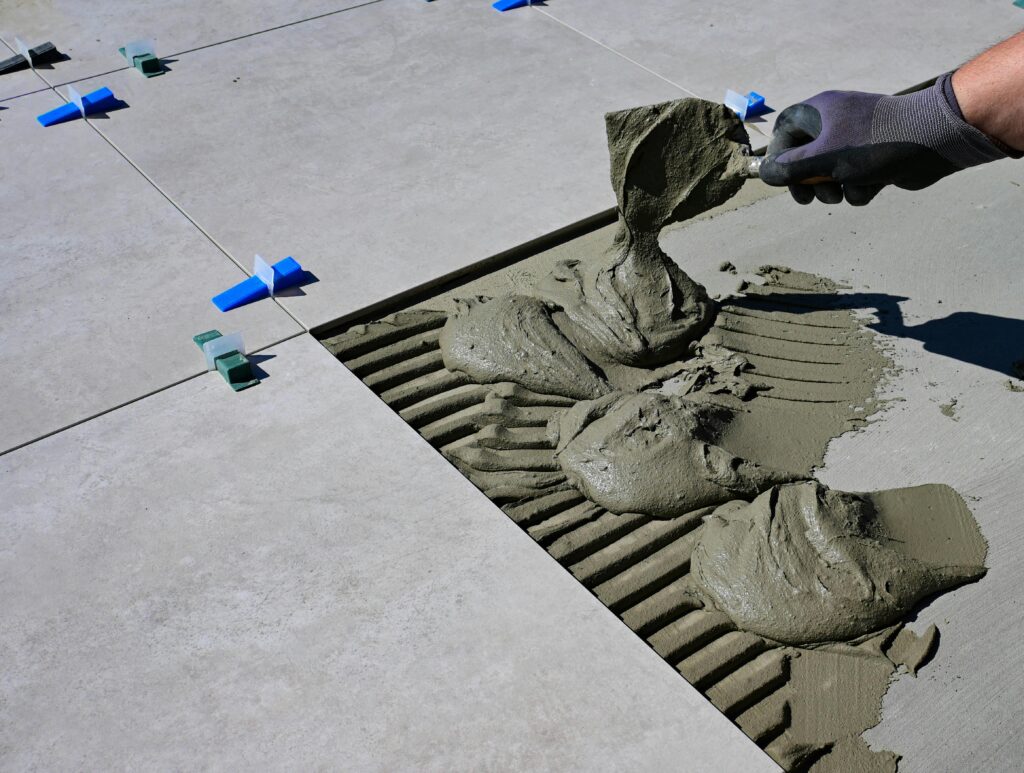
When it comes to tiling, temperatures matter more than people may realise. Working conditions, such as whether extremely hot or cold can significantly affect the performance of tile adhesives, particularly their working and open times.
In warmer months or high-temperature environments, understanding how heat impacts your materials is essential to achieving reliable results. Tiling in hot weather requires careful control of temperature, mixing, and timing. High heat reduces adhesive working time, so by using the right product, mixing smaller batches, and avoiding peak temperatures are key to success.
Why temperature matters when tiling in hot weather
According to British Standards Institution guidelines (BS 5385 Part 4), tiling should not be carried out on backgrounds exceeding 40°C. Ideally, the surface temperature should sit between 5°C and 25°C for optimal performance.
Once temperatures rise or fall outside of this range, adhesives can perform very differently, often leading to avoidable issues on-site.
How heat affects tile adhesive performance in hot conditions
Tile adhesives undergo a chemical process known as an exothermic reaction when mixed with water. This reaction naturally generates heat, and in warmer conditions, it speeds up. As a result, working and open times are significantly reduced.
This may catch installers off guard, leading to poor adhesion, reduced coverage, or tiles not bonding correctly.
Choosing the right adhesive for tiling in hot weather
When working in warmer conditions, selecting the right adhesive is key. Using a standard-setting adhesive with extended open time such as MoreFlex Standard S1, can help counteract the effects of heat provided you remain within the recommended temperature limits set out in BS 5385-4:2015.
However, even with the right product, adjustments to your working practices are still essential.
Practical tips for tiling in hot conditions
Whether you’re tiling outdoors, indoors, or in heat-prone areas like conservatories, these best practices will help maintain performance when tiling in the heat:
1.Store materials correctly
Avoid leaving cement-based products in direct sunlight or hot environments such as vans. Excess heat can affect performance before you even begin your project.
2.Use cool, clean water
Always mix the tile adhesive with fresh, cold water. If you’re using a hose, let the water run first so it reaches a cold temperature, and avoid using water that’s been sitting in the sun.
3.Work in shaded or ventilated areas
If tiling outdoors, create shade where possible. If you’re tiling indoors in the heat, ensure good airflow to reduce heat build-up.
4.Mix smaller batches
Prepare smaller quantities (around 3–4kg at a time). Larger mixes retain more heat and will cause the tile adhesive to set faster.
5.Control mixing speed
Use a slow-speed drill mixer. High speeds generate friction heat, accelerating the setting process.
6.Avoid mixing in direct sunlight
Where possible, mix adhesives in a cooler, shaded area.
7.Adjusting your tiling schedule in the summer months
In extreme heat, changing your workflow can make a significant difference.
Consider:
- Starting earlier in the morning
- Working later in the evening
- Avoiding peak midday temperatures
These small changes can help maintain the tile adhesive performance and improve installation quality.
Final thoughts
Hot weather doesn’t have to stop your tiling project, but it does require careful planning and the right approach. By understanding how temperatures affect tile adhesives and adapting your methods accordingly, you can ensure consistent, high-quality results every time.
If you’re unsure which products or methods are right for your project, the team at Kelmore is always happy to help.
Written by Alex Dawson, Technical Support Specialist at Kelmore.
Our Technical Support Team is available Monday – Friday, 8:00am – 4:30pm on 01257 830511 or technical@kelmore.co.uk. Please don’t hesitate to contact us for any advice or support.